

In the lush, mountainous landscape of Rattaphum District, Songkhla Province, stands Khu Ha Mountain, a sacred natural site that has long provided water, cultural identity, and spiritual meaning to the surrounding community. For the villagers of Khu Ha, the mountain is more than geography—it is the heart of their existence. Yet for more than two decades, this mountain became the battleground for one of Thailand’s most significant legal struggles, with implications that would ripple far beyond the local landscape.

An integral part of the center of this struggle was the Community Resource Centre Foundation (CRC), a Thai public interest legal organization known for defending the rights of communities facing environmental harm. The Khu Ha case exemplifies how legal empowerment from the ground up can lead not only to courtroom victories, but also to national legal reforms and the strengthening of community resilience.
A Struggle Rooted in Sacred Ground
The dispute began in 1997 when government authorities declared Khu Ha Mountain an industrial rock source, even though it had already been designated as a Class 1B watershed conservation area. Later, in 1999–2000, the authorities issued a mining concession to a private company to extract limestone from Khu Ha Mountain, while the villagers at that time had not been informed of either the declaration of the rock source or the concession approval. It was only when the company began blasting the mountain for mining that the impacts became increasingly evident.
The villagers—who were aware of the cultural and ecological significance of the area and who were directly affected—voiced opposition by filing complaints to various agencies, but no solutions were provided. As the impacts grew more severe, they began to lodge serious complaints, and in 2006 formally petitioned the authorities to resolve the problems. Their concerns were not unfounded, as blasting operations scarred the mountain, polluted streams, and generated dust and noise that disturbed daily life. Beyond the physical destruction, villagers described living in constant fear and anxiety, unsure of their future. In total, 326 households were officially registered as affected.


CRC team conducting a legal consultation meeting with community members.
What followed was a remarkable grassroots legal struggle, initiated and carried forward by a community that refused to be silenced. With the support of the Community Resource Centre Foundation (CRC), the villagers launched a multi-faceted legal strategy—filing complaints and bringing lawsuits in the civil court to claim compensation, and later filing a case in the administrative court to revoke the designation of Khu Ha as a rock source. They also had to prepare to defend themselves against lawsuits filed by the mining company, which used SLAPPs (Strategic Lawsuits Against Public Participation) to intimidate community leaders and suppress opposition. In response, the villagers pursued counter-lawsuits against those retaliatory cases.

A Legal First: Recognition of Mental Compensation
In 2014, the case reached a groundbreaking milestone when Thailand’s Supreme Court ruled in favor of the community, awarding “mental compensation” for the emotional harm caused by the mining operation. It was the first time in Thai legal history that psychological suffering due to environmental damage was formally recognized by a court.
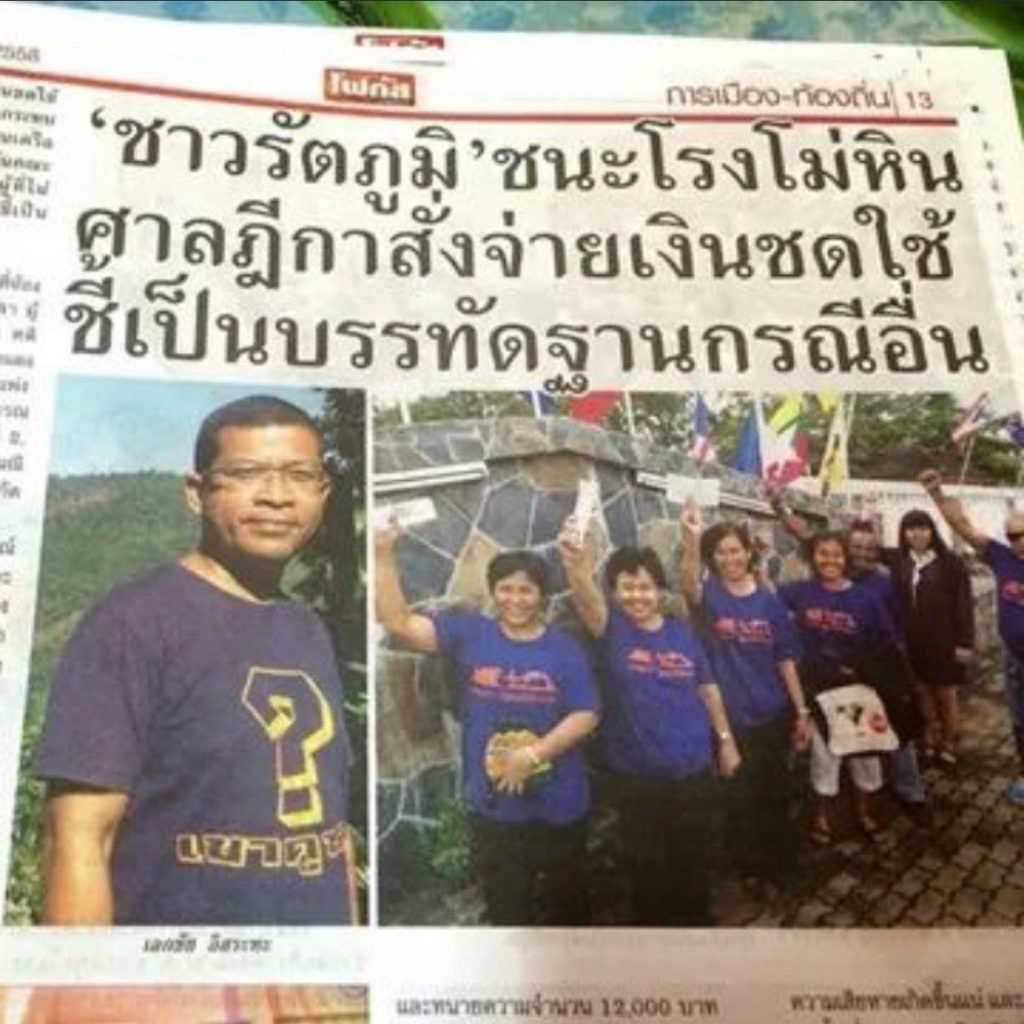
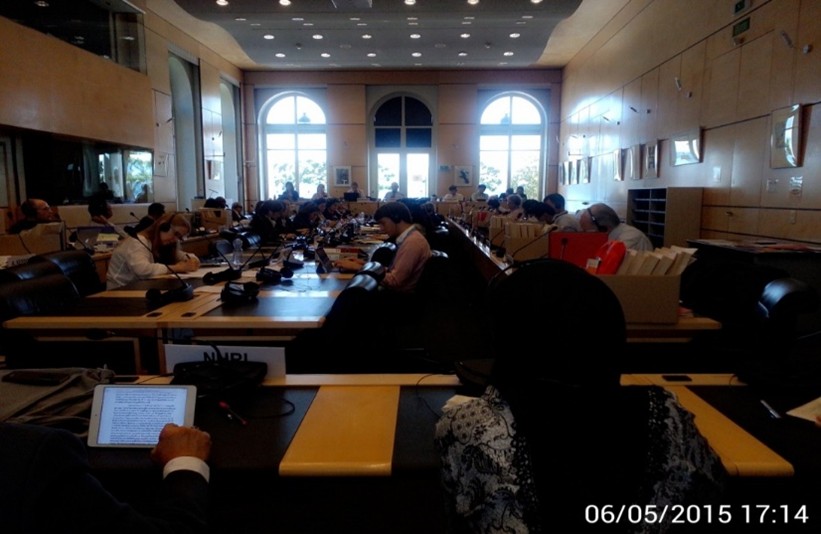
This was not only a legal win—it marked a national policy shift. In 2015, the Thai government referenced this ruling in its official report to the UN Committee on Economic, Social and Cultural Rights (CESCR), acknowledging an expansion of environmental rights and remedies in Thai law.
This success was made possible by CRC’s holistic legal empowerment approach, which included legal education, evidence-gathering, and direct participation of villagers in legal proceedings. Once unfamiliar with legal frameworks, community members became active agents of justice.
Standing Up to SLAPPs: A Victory for Civic Space
In retaliation, the mining company filed a 50-million-baht defamation lawsuit against community leaders. CRC not only defended them but filed a counter-tort case, arguing that the lawsuit itself was an abuse of legal process and a violation of the villagers’ right to civic participation.
In a powerful ruling, the court agreed with CRC’s position and affirmed that villagers have the right to raise concerns with the government. This became a landmark anti-SLAPP precedent in Thailand, now cited in multiple legal defenses of environmental and human rights defenders.

A Lasting Victory and a Long-Term Vision

In 2024, after years of litigation and advocacy, the community achieved its most decisive win: the Supreme Administrative Court ordered the removal of “Khu Ha Mountain” from Thailand’s national mining zone list, effectively banning all future mining activity in the area. This was more than a legal victory—it was a historic defense of cultural identity, ecological heritage, and community rights.

However, the villagers knew that true protection of Khu Ha would require more than one court ruling. They realized that to ensure the mountain’s safety for generations to come, they would need an organized, long-term approach—not only through litigation, but through stewardship and community action.
In response, the community established the “Khu Ha Community Rights Protection Association” (สมาคมพิทักษ์สิทธิชุมชนเขาคูหา)—a grassroots civil society organization committed to sustaining the fight for environmental justice, community empowerment, and alternative development. The association works not only to monitor potential threats, but also to transform the mountain into a living classroom and a model for sustainable, community-led conservation.

CRC remains a key partner in this journey—providing legal guidance, documentation support, and helping the association use law strategically to secure land rights, build community mechanisms, and engage with state agencies. This long-standing partnership between CRC and the association reflects a deeply rooted model of legal empowerment, where the community does not merely win in court but continues to shape the future through organized civic leadership.

A New Strategy: Protecting Through Ecotourism and State Engagement
Recognizing that economic alternatives could play a critical role in sustaining conservation, the community—with support from the association and CRC—began developing eco-cultural tourism activities around Khu Ha. These initiatives draw attention to the area’s spiritual and environmental value, while providing livelihoods that align with preservation.
Today, state agencies have begun to support these efforts, acknowledging the legitimacy and value of the community’s approach. Local authorities are now engaging with the Khu Ha villagers to promote the area as a protected eco-tourism destination—a strategic shift that reinforces long-term protection through local development pathways.
This dual success—removing the mountain from mining zones and positioning it as a community-protected natural site—reflects a comprehensive victory in legal, social, and policy terms.


A Model of Community-Led Justice
The Khu Ha case is more than a court battle. It is a testament to the power of legal empowerment, the strength of grassroots organization, and the importance of partnerships between civil society and local communities.
It shows that legal tools alone are not enough—what sustains change is the combination of law, community leadership, and long-term vision. By founding their own association, developing sustainable alternatives, and continuing to collaborate with legal allies like CRC, the people of Khu Ha have proven that communities can shape the law, protect their land, and inspire policy change from the ground up.
In an era of growing environmental threats and shrinking civic space, Khu Ha stands as a beacon of justice, persistence, and hope.
About Community Resource Centre Foundation
The Community Resource Centre Foundation (CRC) is a Thai non-profit legal organization founded in 2010 to defend community rights, human rights, and the environment. Through strategic litigation, legal empowerment, and advocacy, CRC has helped communities achieve landmark victories against harmful mining, industrial, and development projects. Its work has set national and regional precedents in environmental justice and corporate accountability, including Thailand’s first transboundary class action lawsuit. Guided by the principle “Empowering Communities – Advancing Justice – Protecting Rights”, CRC continues to stand with grassroots movements in Thailand and across the Mekong region.
![[BUR] တိတ်ဆိတ်နေသံများကို ချိုးဖျက်ခြင်း – သဘာဝဘေးသင့် လူထုရဲ့ မမြင်နိုင်တဲ့ ဒဏ်ရာတွေကို ကုစားပေးခြင်း](https://alternativelawgroups.ph/wp-content/uploads/2025/12/Braveheart-Photo-400x250.jpg)
![[TH] จากผู้หนีภัยการสู้รบสู่ผู้พิทักษ์สิทธิ: เมื่ออาสาสมัครกฎหมายชุมชนกลายเป็นกระบอกเสียงแห่งความยุติธรรมในพื้นที่พักพิงชั่วคราว](https://alternativelawgroups.ph/wp-content/uploads/2025/12/Image-9-400x250.jpg)