

Earlier this year, Khaz-JP Padilla grabbed headlines as she made history as the first transgender woman to graduate as valedictorian and summa cum laude from the Capiz State University (CapSU).

In her valedictory speech, she said “I carry not only honors, but hopes for a community long silenced.”
Khaz-JP’s historic achievement stands in stark contrast to what happened a few years ago, when trans women students’ gender expression was not welcomed. They were barred from entering university grounds on the basis of the length of their hair and how they affirm their gender identity through their clothing.
Thanks to the work of courageous trans women students of CapSU and their partner organizations, this policy did not see the light of day, making it possible for the likes of Khaz-JP to achieve the highest graduation honor for student excellence without losing who she is.
No education for trans women
On October 10, 2022, the Office of Student Affairs (OSA) of CapSU informed students who are perceived as trans women that they will be barred from entering university premises unless they cut their hair and wear the uniform prescribed for “males.” The instructions were delivered by the OSA staff to the guards manning the university premises. Even when no formal notice was issued to clarify the directive, the OSA and the guards gave one week to the trans students to comply.
They were also threatened with “stricter implementation” of the uniform policy for the following semesters. The OSA told them that they would not be allowed to enroll if they maintained their current hair length and continued to wear the uniform aligned with their gender identity. The OSA claimed that the order came from the University President herself.
Seeing some of their friends complying with the hair length policy and witnessing their sadness and anguish, Barbie, Bhebe, Nicole, Daday, and Taglaii, trans women students of CapSU sought help. They were able to reach the paralegals trained by Rainbow Rights Philippines from Iloilo Pride Team and Bahaghari Philippines.
The paralegals advised these students that there is an existing Anti-Discrimination Ordinance in Roxas City, Capiz. However, the OSA countered that it is not covered by local ordinances and only answers to the Commission on Higher Education (CHED). Looking back at their argument, it was a blatant ignorance of the law enabled by prejudice, stigma and discrimination.
Two-pronged approach
LGBTQIA+ Filipinos, including students, are constantly being put under threat of discrimination on the basis of sexual orientation, gender identity, gender expression and sex characteristics (SOGIESC).
Pending for twenty-five years in the national legislature is a SOGIESC Specific Anti-Discrimination Bill or a SOGIESC Equality Bill. If made into law, discrimination and violence in the household, schools, workplace, government offices, or virtually all spaces will be outlawed.
Without a national law against such discrimination, trans and gender non-conforming individuals only rely on vaguely worded laws and policies or local ordinances, such as the Roxas City Anti-Discrimination Ordinance, which are limited in scope and penalty.
Hitting a wall during the preliminary negotiations and seeing that the CapSU OSA will resort to feigned ignorance of the law, the paralegals who initially assisted the trans women students onboarded Rainbow Rights in the case. Rainbow Rights suggested a time-tested two-pronged approach: (1) inform CapSU and its stakeholders of its prejudiced position against its trans students and prepare for a legal battle, and (2) organize the trans students and their allies against the unjust policy of the school.
All three organizations helping the students—Rainbow Rights, Iloilo Pride, and Bahaghari—jointly wrote to the President of CapSU and the OSA. They informed the University President of CapSU’s violations of the Anti-Discrimination Ordinance, infringement of students’ right to privacy, violation of the Magna Carta of Women, and of the CHED and the National Government’s diversity policies. Copied in this letter are the CapSU Board of Regents, the provincial government of Capiz and the city government of Roxas, and the regional office of the Commission on Human Rights..
The organizations also used their social media followings to inform the public about what is happening at CapSU.
The initial five trans women students were part of the entire process and included in the core group that strategized the steps. They were key in organizing the student body—delivering physical copies of the letters to local addresses, contacting school officials, and most importantly, leading the fight.
In the spirit of solidarity and allyship, members of the CapSU Student Council also played pivotal roles.
Demonstration of Defiance
With no sign that the OSA or CapSU administration would reconsider their stance, the trans women students and their allies made a decisive choice: they would not wait for permission to claim their right to education. They would walk through the gates together—openly, proudly, and on their own terms. To prepare, the supporting organizations gave them a rapid paralegal crash course, equipping them with the language of their rights and the confidence to assert them.


Then came the first day of the stricter uniform policy. Barbie, Bhebe, Nicole, Daday, and Taglaii gathered with their allies, nerves and determination intertwined. What they carried with them was simple but powerful: their resolve to learn, the knowledge of the law behind them, and the comfort of standing alongside a community that refused to let them walk alone.
As they approached the university gates, the moment felt heavier than they expected. But when they stepped forward, the guards let them through. No one dared to stop them.
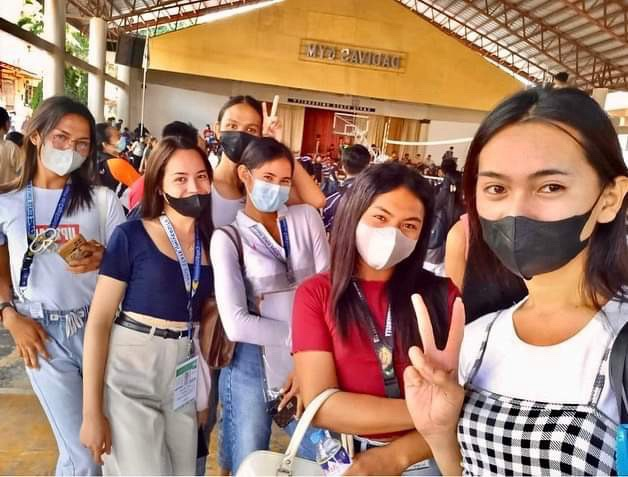

Within the same day, they finally received a reply from the school’s administration. The collective pleas were heard. The President of CapSU refuted the claim that the stricter implementation of the policy came from her, and she ordered the OSA to halt its implementation.
It’s hard to say what finally pushed the university to act. Maybe it was the looming threat of a lawsuit outlined in the letter. Maybe it was the relentless search for someone who could reach the president and appeal to her sense of fairness. Perhaps it was the growing wave of online criticism calling out CapSU’s discriminatory policy. Or maybe it was the undeniable courage of the students themselves: their quiet defiance, their refusal to shrink, their determination to defend their right to learn.
Whatever the reason, something shifted. And on that day, equality finally won.
Graduating from injustice, commencing hope
The organizations are still in touch with Bhebe and Taglaii, two of the original five trans women who resisted the unjust policy. In a recent conversation with Rainbow Rights, Taglaii said, “Thank you so much for your help. All of us have already graduated from CapSU. We see trans students there, and their confidence in their gender expression, and that makes us so happy.”
A student organization called the United Colours of CapSU has been formed and fortified through the struggle of October 2022.
Although they give credit to the organizations, the students worked the most to secure an inclusive policy for trans and gender nonconforming students at CapSU. They are the ones who made trans valedictorians and summa cum laudes possible. (Taglaii also graduated cum laude. Not too shabby.) The gates of CapSU opened that day not just for five young trans women with long hair, but for every student who dares to dream of studying as their true selves.
About the Rainbow Rights Philippines
Rainbow Rights Philippines, or R-Rights, is a non-profit, non-partisan organization advocating for LGBTQIA+ rights in the Philippines. Based in Quezon City, it continues to partner and cultivate bonds with student communities in Capiz and anywhere else in the Philippines to fight discrimination on the basis of sexual orientation, gender identity, gender expression and sex characteristics, to inform them of their rights and the power of collective action in changing lives, and to assist them in accessing justice through a milieu of strategies. Their website is rrightsphl.org.
![[BUR] တိတ်ဆိတ်နေသံများကို ချိုးဖျက်ခြင်း – သဘာဝဘေးသင့် လူထုရဲ့ မမြင်နိုင်တဲ့ ဒဏ်ရာတွေကို ကုစားပေးခြင်း](https://alternativelawgroups.ph/wp-content/uploads/2025/12/Braveheart-Photo-400x250.jpg)
![[TH] จากผู้หนีภัยการสู้รบสู่ผู้พิทักษ์สิทธิ: เมื่ออาสาสมัครกฎหมายชุมชนกลายเป็นกระบอกเสียงแห่งความยุติธรรมในพื้นที่พักพิงชั่วคราว](https://alternativelawgroups.ph/wp-content/uploads/2025/12/Image-9-400x250.jpg)