

Farmers from Tany Village stood together in the hot sun to stop the government from taking their land. They had worked this land for many years, and now they were fighting to keep it. This is the story of 38 farming families who didn’t give up, and how learning about their rights helped them win a fight that seemed impossible.
The Problem Begins
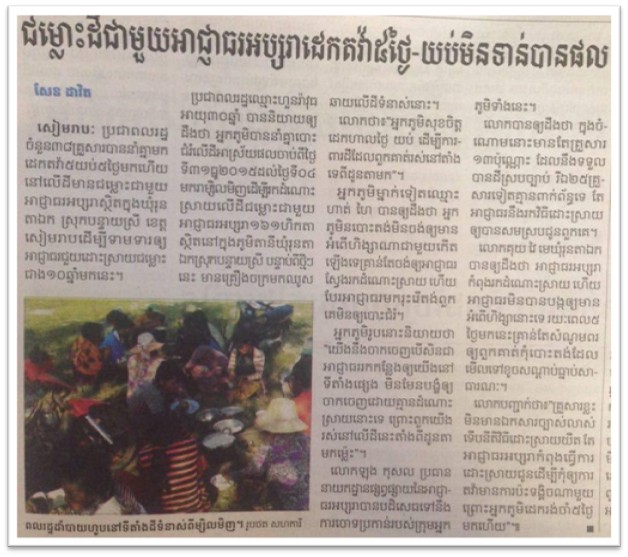
In 2005, the The Authority for the Protection of the Site and Management of the Region of Angkor (APSARA)—responsible for managing and protecting the Angkor Archaeological Park—tried to evict 38 families in Tany village, Run Ta Ek commune, Banteay Srey district, and Siem Reap. The APSARA claimed the land was part of the UNESCO-protected Angkor site.
In 2006, they offered the families only $500–$700 per plot—far below the land’s true value. The families refused. They did not want cash; they wanted replacement land nearby.
The APSARA tried to divide them by offering compensation to only 13 families, but the community stood firm. The 13 families turned down the offer, insisting that all 38 must be included in any settlement.
A Leader Steps Up

From the beginning, Mr. Haun Ravuth, along with six others, emerged as a strong leader. Mr. Ravuth is a farmer from Tany Village. Before the problem, he and others in the village lived happily, growing rice and other crops on their large plots of land.
When the land dispute with APSARA began, he became a strong leader. He believed in fairness and helped his community fight for their land rights. He also became a teacher, sharing what he learned about the law with his neighbors. He stepped up as a leader because he actively wanted to help others gain important knowledge and skills.
Guided by a sense of justice, he declared, “We must not allow anyone to oppress us.”
He led peaceful protests to prevent the APSARA from bulldozing their farms.
In 2011, APSARA accused Mr. Ravuth and the six representatives of illegally occupying public property. Fearing arrest, Ravuth sought help from lawyers at the Community Legal Education Center (CLEC). With CLEC’s legal defense, the group avoided detention, and the charges were later dismissed.
PHOTO: Mr. Haun Ravuth, the outstanding representative of the 38 families.
Learning to Fight Back with the Law
CLEC, a legal empowerment organization, began working closely with the community. Between 2012 and 2024, they trained Ravuth and his neighbors to understand and use the law. With the help from CLEC’s legal team, the farmers learned about their rights under Cambodia’s 2001 Land Law, and how to navigate both judicial and out-of-court processes.
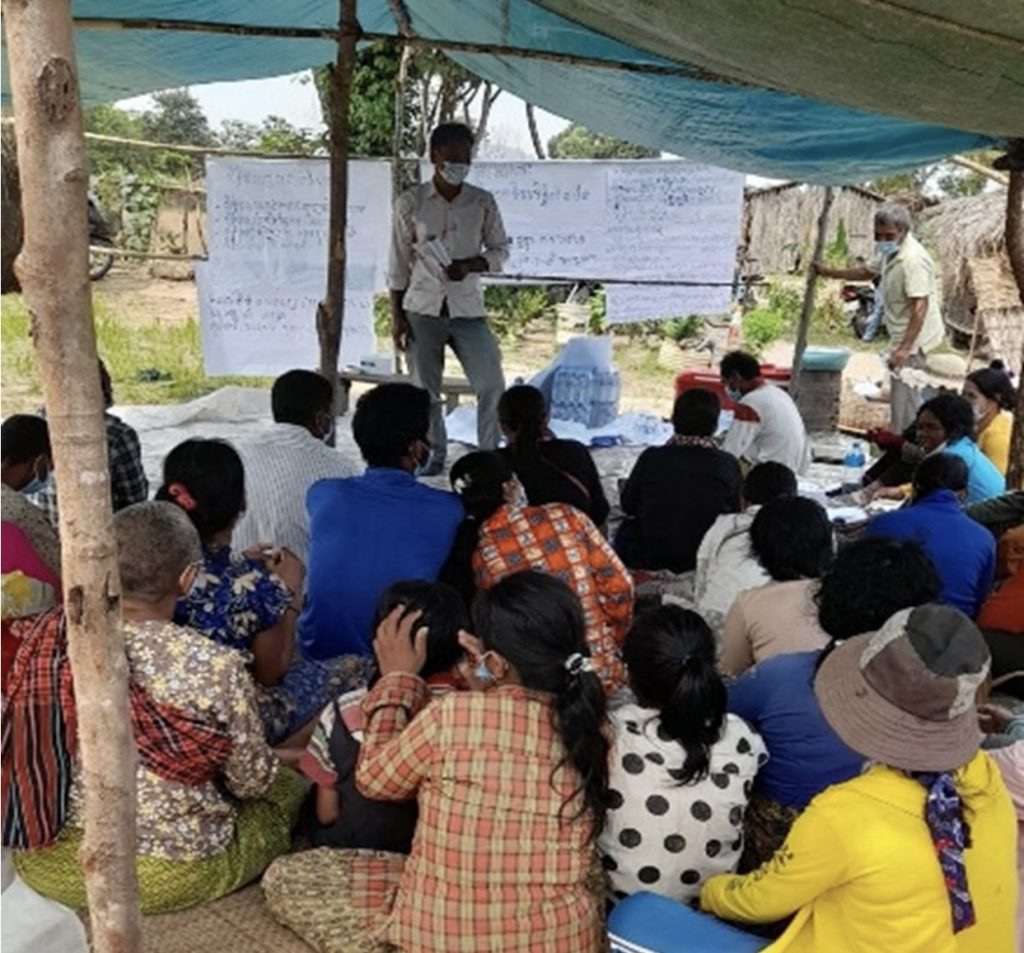
Ravuth, for instance, attended at least ten training sessions.
CLEC also helped them draft official letters, file complaints, and engage authorities. Furthermore, CLEC strengthened community organizing, helping the farmers hold meetings, develop action plans, and connect with activists from other provinces. This work solidified their unity, the key to successfully stopping a clearing attempt in 2012.
Putting Knowledge into Action
The training transformed Ravuth into both a leader and a teacher. After each session, he shared lessons with his neighbors—sometimes gathering them in the fields to explain their land rights, freedom of speech, and access to justice.
When the APSARA again attempted to clear the land in 2012, the community responded with organized protests. Their unity forced the APSARA, once unwilling to negotiate, to sit down with all 38 families.
Ravuth grew more confident in negotiations. To the APSARA’s lawyer, he once declared: “We have lived on this land since we were born. We have rights to live and farm our land under the Land Law of 2001.”
Grateful for CLEC’s support, Ravuth later reflected: “CLEC is like a God for my community. Without them, our land would have been lost.”
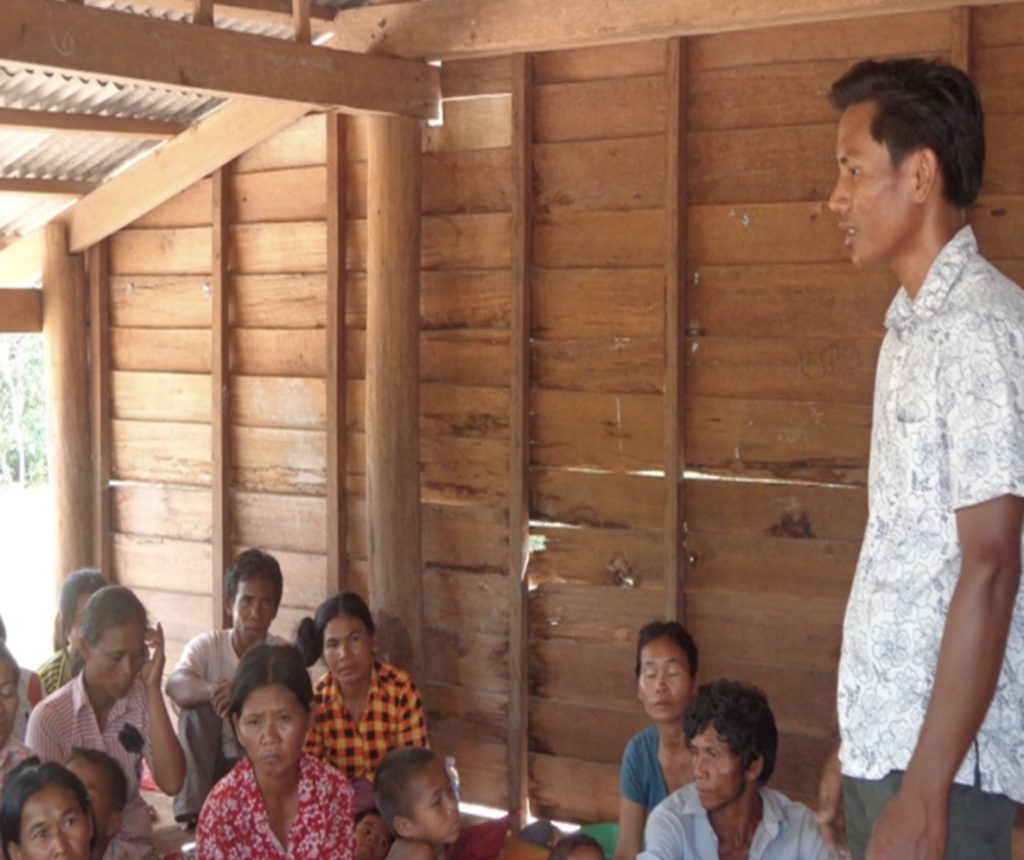
PHOTO: During the experience-sharing session in Tany village from two communities from Boengkak Lake and Borey-Keyla communities in Phnom Penh, Ravuth shared the story of his conflict and fighting.
A Great Victory for the Community
After nearly 20 years of fighting, the families finally won in April 2024. All 38 families got fair solutions that fit what they needed. Seven families got $1,500 for each hectare of land. Four families got new land outside development areas, ranging from 3.5 to 10 hectares each. Twenty-seven families got 138 plots within development areas, each 20m x 30m. These plots were worth between $8,000 and $25,000, which was more than their old farmland.
In the beginning, Mr. Ravuth did not believe they could win or get paid. He felt it was like “an egg trying to fight a stone”, with APSARA being a strong government agency (the stone) and the village community being the weak egg. But in the end, the community won!
This happened because most of the community members understood their rights and had important legal knowledge, led by their farmer leaders. Knowing the law helped them in two ways: it kept the community safe from problems and made sure they didn’t lose what was theirs.
“If the community members and leaders did not have knowledge of the law, they would have faced risks and problems, and they would have lost their benefits,” Mr. Ravuth said. He also said he was happy that the case ended with them getting paid, and now they have time to work and earn money for their families, and they no longer feel worried.
About Community Legal Education Center
The Community Legal Education Center (CLEC) is a Cambodian non-governmental organization established in 1996 with the vision of the Cambodian people living in a society under the rule of law, in peace and social harmony. CLEC works to promote the rule of law, access to justice, and community legal empowerment by providing legal aid, public interest litigation, legal education, and advocacy support to grassroots communities. It specifically focuses on Indigenous peoples, women, and youth affected by land conflicts, environmental injustice, and human rights violations. Core activities include training community-based paralegals, offering legal coaching and documentation tools, supporting alternative dispute resolution mechanisms, and engaging in policy advocacy at both local and national levels. CLEC’s programs, such as the Legal Empowerment Program (LEP) and Access to Justice Program (AJP), aim to enhance communities’ participation and capacities to secure land and natural resource (LNR) tenure and access to fair dispute resolution. The organization collaborates closely with civil society partners, local authorities, governmental authorities, and other stakeholders to achieve its mission.
![[BUR] တိတ်ဆိတ်နေသံများကို ချိုးဖျက်ခြင်း – သဘာဝဘေးသင့် လူထုရဲ့ မမြင်နိုင်တဲ့ ဒဏ်ရာတွေကို ကုစားပေးခြင်း](https://alternativelawgroups.ph/wp-content/uploads/2025/12/Braveheart-Photo-400x250.jpg)
![[TH] จากผู้หนีภัยการสู้รบสู่ผู้พิทักษ์สิทธิ: เมื่ออาสาสมัครกฎหมายชุมชนกลายเป็นกระบอกเสียงแห่งความยุติธรรมในพื้นที่พักพิงชั่วคราว](https://alternativelawgroups.ph/wp-content/uploads/2025/12/Image-9-400x250.jpg)